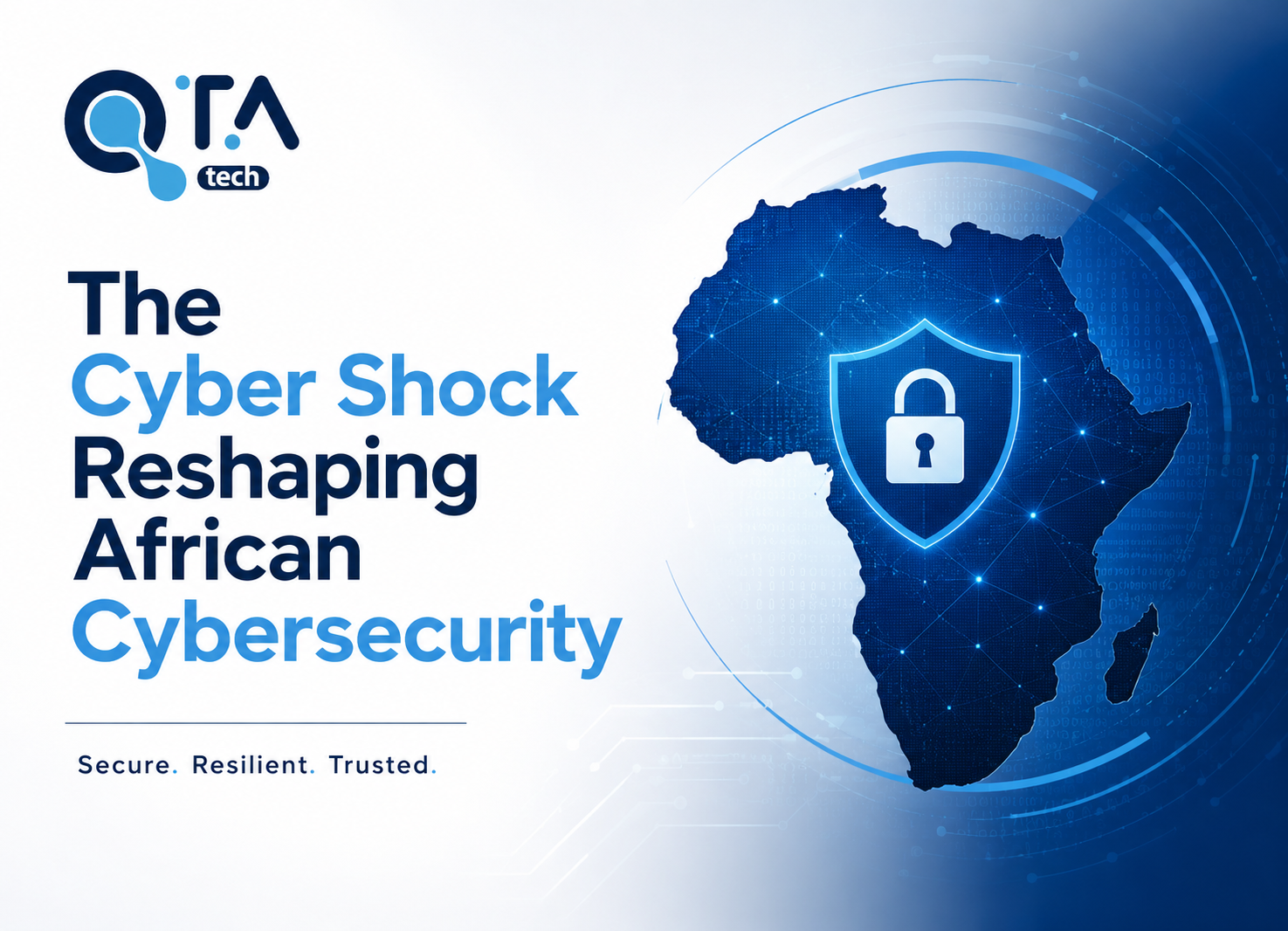
The Cyber Shock Reshaping African Cybersecurity
A critical vulnerability that permanently changes the rules of the game
The critical vulnerability recently disclosed is not an isolated incident nor just another security alert. It marks a strategic turning point in the evolution of global cybersecurity.
What this crisis reveals is brutal: cyberattacks are no longer artisanal. They are now industrialized, automated, and operated at scale by threat actors capable of exploiting vulnerabilities within hours of their disclosure.
In this environment, traditional security architectures are reaching their limits. The historical model based on protecting the network perimeter is no longer aligned with the realities of modern infrastructures.
Hybrid cloud environments, multi-site infrastructures, exposed APIs, workforce mobility, IoT, SaaS applications, and remote work have fundamentally redefined the attack surface of organizations.
The question is no longer whether an organization will be targeted, but whether it is truly prepared to withstand an attack.
For African companies engaged in digital transformation, this paradigm shift requires an immediate reassessment of technological and strategic priorities.
Zero-Trust: a security architecture, not a trend
The Zero-Trust approach is now emerging as the new reference standard for critical infrastructures and modern information systems.
Its core principle is simple: no user, device, service, or application should ever be trusted by default.
Every access request must be authenticated, verified, contextualized, and continuously monitored.
This approach fundamentally transforms the way digital infrastructures are designed.
Security can no longer be added after system deployment. It must be integrated from the architecture and design phase.
This notably involves:
advanced Identity and Access Management (IAM), granular network segmentation, multi-factor authentication, continuous monitoring of security events, and behavioral detection capabilities powered by artificial intelligence.
Organizations that continue operating under implicit trust models are now exposing themselves to major risks.
At QTA TECH, we believe every new technology project must now integrate a “Security by Design” and “Zero-Trust Native” mindset.
Cybersecurity can no longer be treated as an optional layer.
It must become a core component of business architecture.
Why Act Now?
Because a single unpatched vulnerability can now:
compromise an entire infrastructure, disrupt critical operations, expose sensitive data, and destroy customer trust within hours.
👉 Organizations seeking to strengthen their security posture should immediately initiate architecture audits, network segmentation assessments, and IAM governance reviews.
Africa: digital trust is becoming a competitive advantage
The African market is experiencing a massive acceleration in digitalization across financial, real estate, logistics, industrial, and government sectors.
This transformation creates enormous economic opportunities, but it also significantly increases exposure to cyber risks.
Regulations are evolving rapidly.
Compliance requirements are intensifying.
Customers are becoming more sensitive to data protection.
Investors now assess digital resilience before committing.
In this new environment, digital trust becomes a strategic currency.
Companies capable of demonstrating:
the robustness of their infrastructures,
the maturity of their security processes,
their incident response capabilities,
and their regulatory compliance,
will gain a decisive market advantage.
Conversely, organizations unable to prove their resilience maturity will gradually see their commercial opportunities decline.
The market is becoming more demanding.
Clients no longer want only high-performing platforms.
They want platforms that are reliable, secure, and auditable.
At QTA TECH, we believe cybersecurity must now be considered a business growth driver, not merely a technical constraint.
Future market share will be won through the ability to inspire trust.
What this means for african businesses
Organizations must now:
- adopt structured cybersecurity governance,
- strengthen data protection policies,
- implement business continuity strategies,
- and invest in infrastructures capable of resisting modern cyber threats.
👉 Want to assess your organization’s cyber maturity or strengthen the security of your critical infrastructures? Our teams can support you with cybersecurity audits, strategy, and compliance initiatives tailored to your digital environment.
Cyber skills are becoming a strategic sovereignty issue
The current transformation of the cyber landscape is also creating tremendous pressure on technical skills.
Organizations will increasingly need professionals capable of mastering:
- Zero-Trust architectures,
- cloud security,
- Identity and Access Management,
- risk governance,
- incident response,
- and advanced detection and monitoring mechanisms.
Upskilling is no longer a differentiating advantage.
It has become an operational necessity.
Professional certifications now play a central role in validating technical and strategic expertise.
Among the most relevant certifications in today’s context:
- Microsoft Azure Security Engineer Associate (AZ-500)
- Certified Cloud Security Professional (CCSP)
- CompTIA Security+
have become strong benchmarks for professionals aiming to evolve into critical cybersecurity roles.
At QTA TECH, we actively encourage continuous technical upskilling to build a long-term culture of resilience.
Training today’s cyber talents means securing tomorrow’s strategic infrastructures.
An immediate challenge for businesses and professionals
Organizations investing now in:
training,
certifications,
security awareness,
and governance,
will be best prepared to face the next waves of cyber threats.
👉 Looking to strengthen your teams’ cybersecurity capabilities or implement a tailored upskilling program? Contact QTA TECH to build a training strategy aligned with your business and technology objectives.
Cybersecurity is no longer an IT topic — It is a strategic business issue
The current cyber shock is profoundly redefining the priorities of modern organizations.
Digital resilience is becoming a critical factor for growth, reputation, and competitiveness.
The organizations that will succeed tomorrow are those capable of:
securing their infrastructures,
protecting their data,
ensuring operational continuity,
and establishing long-term trust with customers and partners.
In an environment where cyber threats evolve faster than ever, inaction has now become the greatest risk.
QTA TECH is committed to supporting African organizations in building robust, resilient, and secure digital infrastructures capable of sustaining long-term growth and digital transformation.
👉 Need a cybersecurity audit, Zero-Trust advisory, or a critical infrastructure security strategy? Discover our services on QTA TECH and connect with our experts to begin your cybersecurity transformation.